
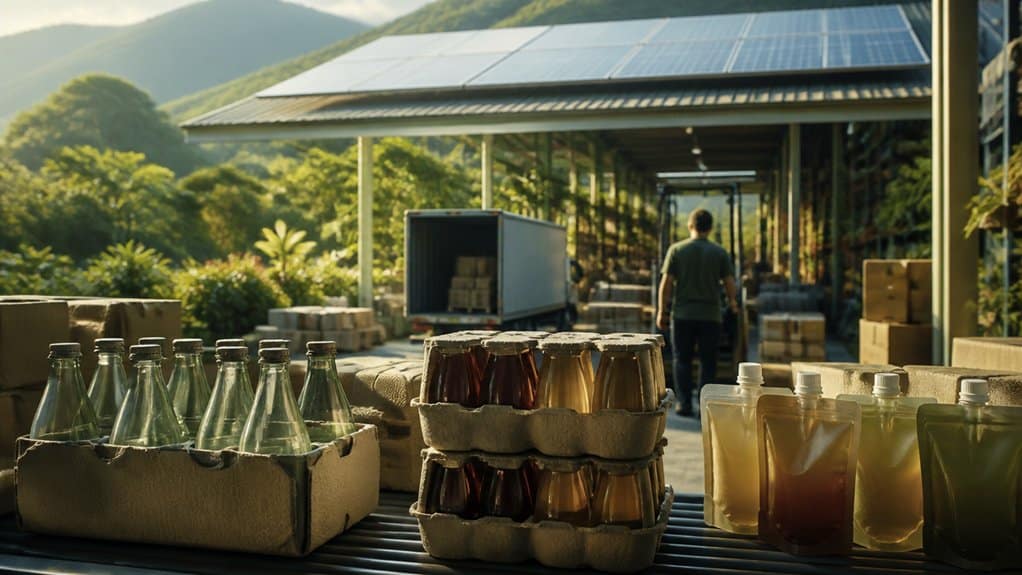
To cut beverage-logistics emissions beyond cans, match packaging to your product, routes, and recovery infrastructure. Lightweight PET and cartons can reduce transport weight, while glass offers strong protection but increases shipping impacts. Reusable glass or stainless-steel systems can lower single-use demand when return rates, cleaning, and transport are efficient. Recycled or bio-based materials also depend on local collection and processing. Compare lifecycle impacts, product losses, and cost per beverage; the sections ahead examine the key trade-offs.
What Are the Alternatives to Beverage Cans?
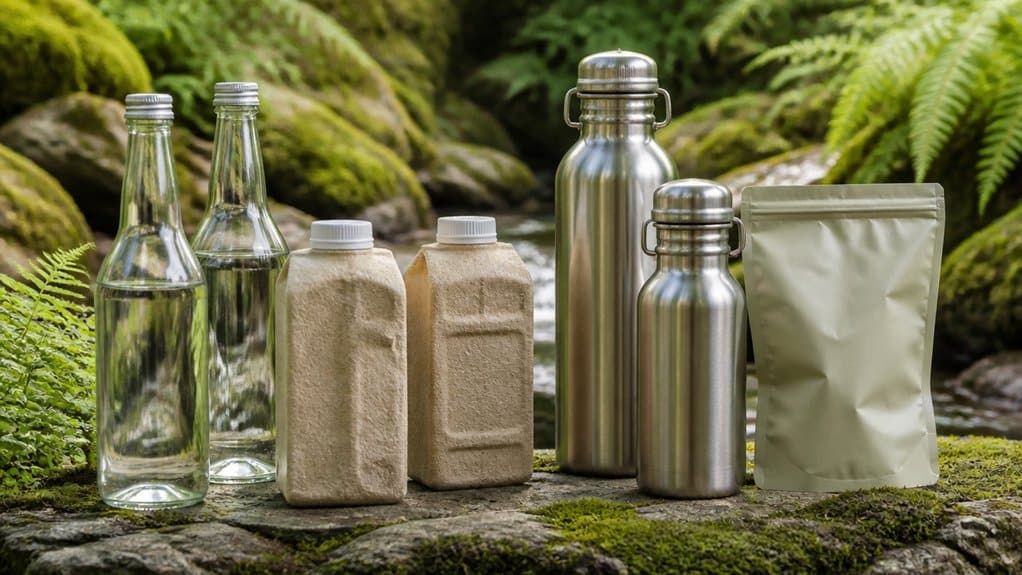
As beverage brands look beyond cans, they’re weighing packaging formats that reduce lifecycle emissions, material use, and transport impacts without compromising product protection. You can consider glass bottles, lightweight PET bottles, cartons, and refillable kegs, each suited to different products and distribution systems.
An Innovative Container may combine paperboard with thin barrier layers, limiting plastic while protecting carbonation, flavor, and shelf life. You’ll also find molded fiber and bio-based polymers among emerging Eco Friendly Materials, though their performance depends on coatings, feedstocks, and end-of-life infrastructure.
Paperboard barriers, molded fiber, and bio-based polymers can reduce plastic, but performance depends on protection needs and end-of-life options.
Reusable glass or stainless-steel systems can cut single-use demand when return routes work efficiently. To identify viable alternatives, assess barrier requirements, filling-line compatibility, package weight, and recovery access.
Your selection should fit the beverage and supply chain, not rely on material labels alone.
How Do Sustainable Beverage Packages Compare?
Each sustainable beverage package trades off material use, product protection, transport weight, and recovery options. When you compare glass, cartons, recycled plastics, and plant-based materials, assess impacts across the full life cycle—not just package weight.
Glass offers strong barrier performance and established recycling, but its mass raises shipping emissions. Cartons use less material and travel efficiently, though layered components can complicate recovery. Recycled plastics may reduce demand for virgin resin, yet collection quality and recycling capacity vary by region. Plant-based materials can lower fossil feedstock use, but their benefits depend on sourcing and end-of-life infrastructure.
Innovative Packaging succeeds only when local systems can process it and product losses stay low. Your procurement choices should also weigh cost, supply reliability, and Consumer Acceptance; sustainability claims need evidence from comparable life-cycle data.
How Do Reuse and Protective Designs Help?
Reuse can cut packaging demand, but only when containers complete enough return cycles to offset the added washing, transport, and handling. You can improve that balance by selecting formats that withstand repeated filling, cleaning, and distribution without losing function. Material durability matters: a bottle that resists impact, abrasion, and thermal stress can stay in circulation longer, reducing replacement needs and material use per serving.
Design innovation also protects products while limiting packaging. You can use molded geometry, reinforced corners, or fitted dividers to absorb shocks and prevent breakage during transit. Better protection can reduce beverage losses, whose embedded water, energy, and emissions may exceed the footprint of added packaging.
Match protective features to actual handling risks; excess material can erase gains. Track return cycles, damage rates, and cleaning impacts to assess whether reuse delivers net environmental benefits.
What Does It Take to Scale Them?
Scaling sustainable beverage materials takes more than proving they work in a pilot; you need reliable supply, manufacturing capacity, and performance across existing filling and distribution systems.
Scaling sustainable beverage materials requires dependable supply, manufacturing capacity, and proven performance across existing filling and distribution systems.
Manufacturing scalability depends on securing consistent feedstocks, qualifying multiple suppliers, and adapting equipment without compromising line speed, seal integrity, or shelf life. You’ll also need lifecycle data that accounts for energy, water, transport, and end-of-life conditions, rather than relying on material claims alone.
Test formats under real distribution stresses, then measure breakage, product loss, and recovery rates.
Consumer acceptance matters too: you must guarantee packaging feels convenient, protects quality, and communicates clear disposal or return instructions.
Coordinate converters, bottlers, retailers, and recovery operators early, because a material scales only when infrastructure can handle it.
Track cost and emissions per delivered beverage as volumes grow, and revise specifications when evidence reveals trade-offs.
Frequently Asked Questions
How Do Beverage Packaging Regulations Differ Across Countries?
Beverage packaging rules vary wildly across countries: you’ll encounter different recycling mandates, deposit systems, labeling requirements, and material restrictions. Innovative container designs and Eco friendly material sourcing help you meet local standards while reducing environmental impact.
What Certifications Verify Sustainable Beverage Packaging Claims?
You can verify sustainable beverage packaging through FSC or PEFC chain-of-custody certification, Cradle to Cradle, and recognized compostability standards like ASTM D6400 or EN 13432. Check scope carefully: Eco friendly inks and biodegradable adhesives need separate evidence.
How Can Consumers Identify Recyclable Beverage Packaging Locally?
You can identify locally recyclable beverage packaging by checking Recycling symbols against your municipality’s Local collection programs. Let the label guide you, but verify accepted materials online; collection rules vary, and symbols alone don’t guarantee curbside acceptance.
Who Is Responsible for Collecting and Sorting Used Beverage Packages?
You share responsibility: municipalities and waste contractors collect and sort beverage packages, while producers may fund systems through extended producer responsibility. Your Consumer participation—correct sorting and local guidance—helps Recycling infrastructure recover materials efficiently and reduce contamination.
How Does Sustainable Packaging Affect Beverage Shelf Life?
Sustainable packaging can extend shelf life like a shield, or shorten it if barriers underperform. Innovative materials help you balance oxygen, light, and moisture protection with recyclability, supporting Shelf longevity while reducing product waste and environmental impact.
Leave a Reply