
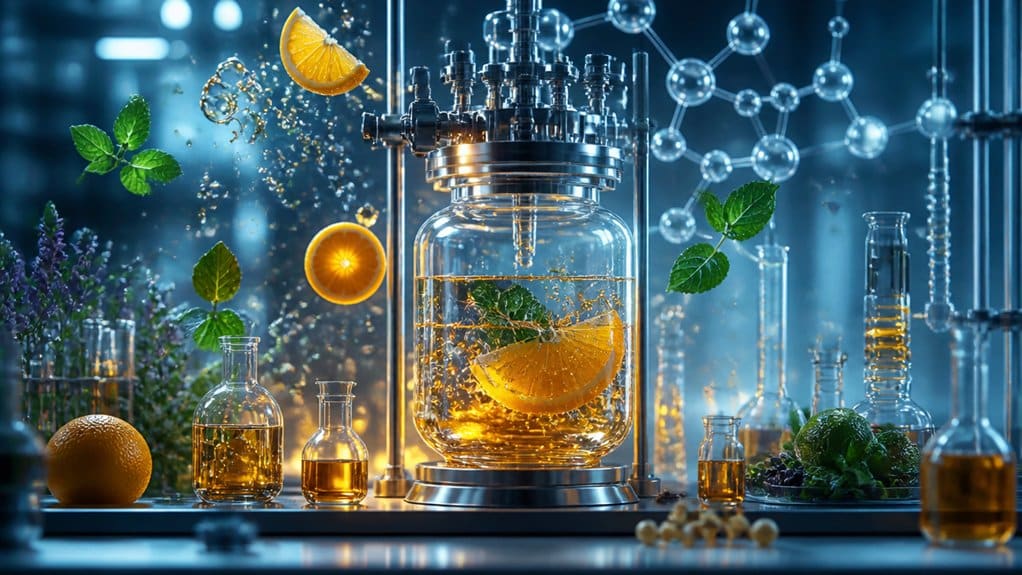
Beverage flavor engineering combines sensory science, food chemistry, and formulation design to turn your target taste into measurable choices. You map sweetness, acidity, bitterness, aroma, and mouthfeel, then use molecule analysis to select compatible ingredients and anticipate effects from processing through storage. AI models and sensory panels help you refine formulas through controlled feedback. To reduce sugar, you can blend sweeteners, rebuild flavor with botanicals, and add soluble fibers for body. Next, explore how these methods shape better drinks.
What Beverage Flavor Engineering Involves
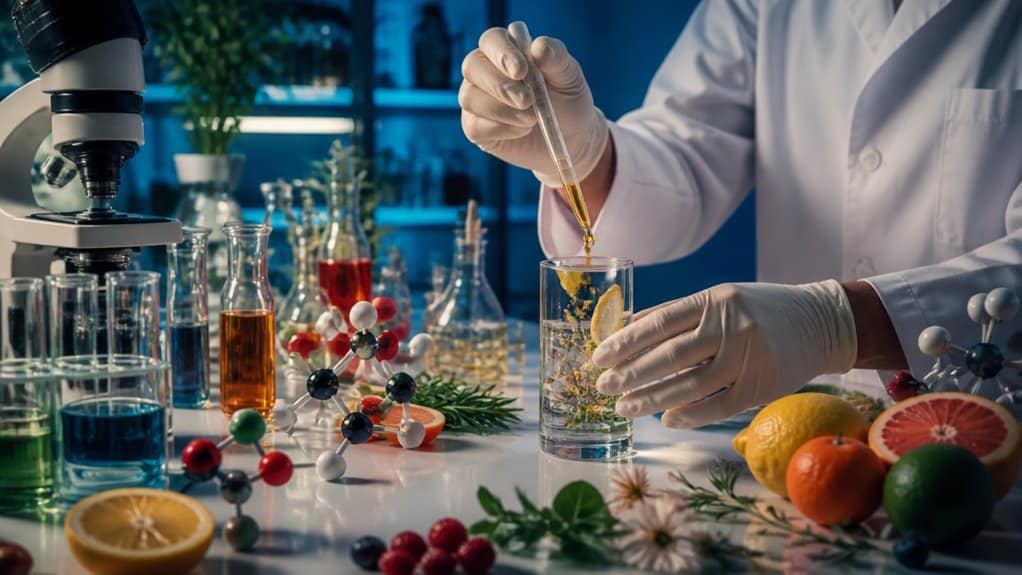
Beverage flavor engineering combines sensory science, food chemistry, and formulation design to create a drink’s intended taste and aroma. You translate a target profile into measurable choices, balancing sweetness, acidity, bitterness, aroma, and mouthfeel.
Flavor molecule analysis helps you identify compounds that drive signature notes, reveal unwanted interactions, and guide precise flavor selection. You then use ingredient compatibility testing to check how flavorings interact with water, sweeteners, acids, proteins, carbonation, and preservatives.
These interactions can shift solubility, stability, color, or aroma during processing and storage, so you design the formula for its full lifecycle. You also account for dosage, ingredient sourcing, labeling requirements, and production constraints.
How AI and Sensory Testing Refine Drink Formulas
Once you’ve defined a drink’s target profile, AI and sensory testing help refine its formula with measurable feedback. You can train models on ingredient data, chemical analyses, and panel ratings to predict how each adjustment may affect aroma, taste, and finish.
The system can identify a Flavor molecule linked to a desired note, then suggest compatible ingredients and concentrations. You’ll still need controlled tasting: trained assessors rate samples for intensity, balance, and aftertaste, while consumer panels reveal broader sensory perception.
Feed those results back into the model, and it can prioritize promising prototypes for the next round. Keep preparation, serving temperature, and evaluation conditions consistent, so you can distinguish formula effects from testing noise.
This iterative workflow helps you make targeted changes, validate predictions, and converge on a reproducible flavor profile.
How to Cut Sugar Without Losing Flavor
When you reduce sugar, you also remove sweetness, body, and flavor cues that help a drink feel balanced. To preserve impact, map how sweetness interacts with acidity, aroma, and texture across each sip. Natural sweeteners can restore sweetness, but you’ll need to match their onset, intensity, and finish to the beverage’s flavor profile.
Blend options strategically to minimize lingering notes and maintain a clean sensory arc.
Then rebuild complexity with flavor enhancers. Citrus, spices, botanical extracts, and carefully calibrated salt can amplify existing notes without simply making the drink sweeter.
You can also use aroma design to increase perceived sweetness: vanilla or ripe-fruit volatiles often shift sensory expectations.
For body, consider soluble fibers or hydrocolloids that improve viscosity and carry flavor.
Validate every adjustment through controlled sensory testing, checking sweetness, aftertaste, and balance at serving temperature.
Frequently Asked Questions
How Are Natural Flavor Extracts Sourced for Beverage Production?
You source natural beverage extracts from plants, fruits, spices, and other botanicals; roughly 40% of citrus peel can yield essential oil. Botanical extraction captures aromas, while Flavor compound synthesis can refine profiles—you verify origin, purity, and consistency.
What Regulations Govern Flavor Labeling on Beverage Packaging?
In the U.S., FDA rules govern beverage flavor labeling; you must identify ingredients by common or usual names and disclose certified colors. Regulatory compliance and Labeling accuracy require checking applicable standards, allergen rules, and market-specific requirements before printing.
How Long Do Engineered Beverage Flavors Remain Stable?
Your engineered beverage flavors may stay stable for months to over a year, but the clock depends on formulation, packaging, and storage. Flavor longevity isn’t set in stone; Stability testing reveals your product’s reliable shelf life.
Can Flavor Engineering Accommodate Common Food Allergies?
Yes—you can use flavor engineering to create Allergy friendly formulations by selecting verified ingredients and controlling production. You’ll still need to assess Cross reactivity concerns, validate suppliers, and test finished beverages for allergens and labeling accuracy.
How Does Sustainable Packaging Affect Beverage Flavor Preservation?
How can packaging protect taste while reducing waste? Eco friendly Containers can limit oxygen, light, and moisture exposure, preserving volatile aromas and slowing oxidation. You’ll improve Flavor Sustainability by matching barrier materials and seals to each beverage’s chemistry.
Leave a Reply